The easiest way to find a farming YouTube channel you’ll stick with is to pick a job you want to see. Maybe you’ve driven past combines without knowing what happens inside. Maybe you’re there for the tractors, or you’d rather watch somebody work a flock of sheep. These seven channels put you close enough to see why a day on a farm rarely goes exactly to plan.
Find your first farming video
| Channel | Best for | Start with |
|---|---|---|
| Laura Farms | Understanding what the crops are grown for | The difference between field corn and the corn you eat (36:48) |
| Millennial Farmer | Following harvest on a Minnesota family farm | First day of harvest (19:38) |
| Welker Farms | The history behind giant tractors | A century of Montana farming and Big Bud tractors (12:08) |
| Larson Farms | What a crew does when harvest begins | First day of the 2025 harvest (22:46) |
| How Farms Work | Understanding how a job gets done | Starting corn harvest (12:40) |
| Peterson Farm Bros | Getting your bearings on a family farm | Farm tour (20:04) |
| The Sheep Game | Watching a livestock skill up close | Shearing at the Great Yorkshire Show (16:11) |
1. Laura Farms for the questions you’d ask from the tractor cab
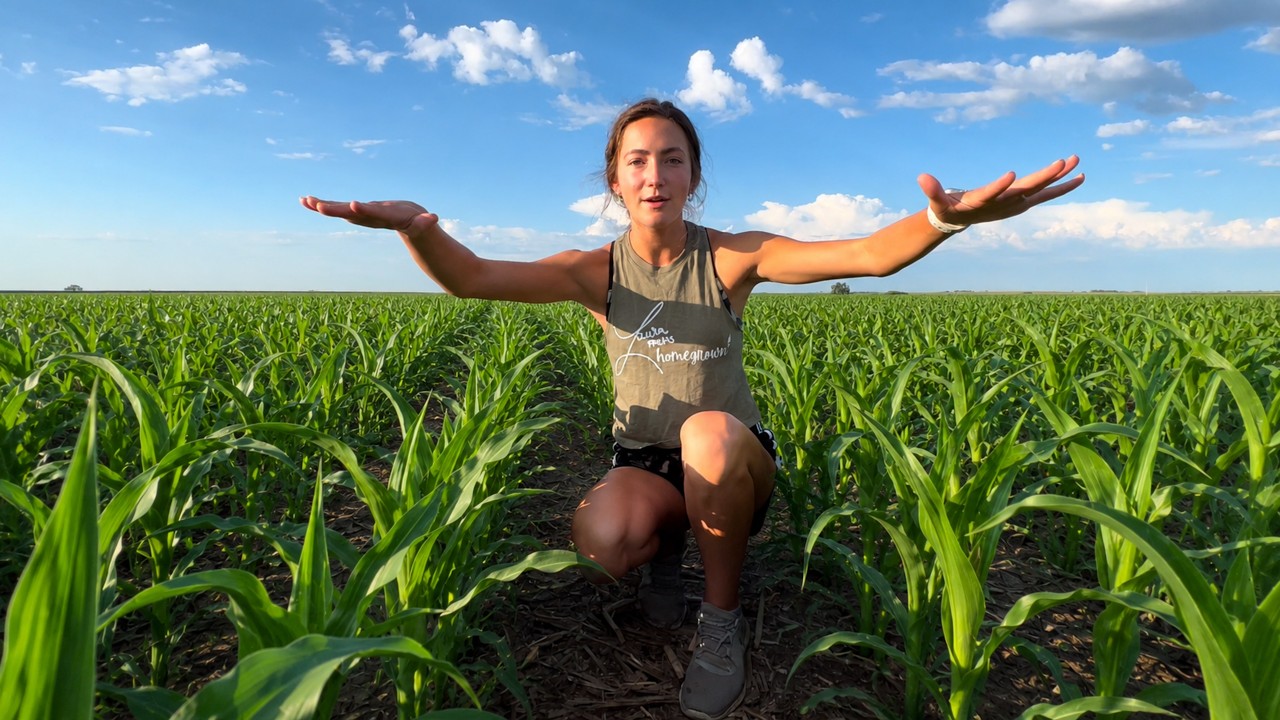
Laura Wilson is a fifth-generation farmer in Nebraska. She and Grant grow irrigated corn and soybeans, so an episode can be as much about getting water to the crop as getting it out of the field. Laura has taken that work to a very different audience with a children’s book, Roger’s Hay Day, which she discussed in an RFD-TV interview about her FFA partnership.
Watch next: Pivot Irrigation Problems. See how an irrigation problem becomes part of a working day.
Laura Wilson farms corn and soybeans in Nebraska with Grant. The field-corn episode is a good first watch because it starts with something you already know from the grocery store and gives you a different way to look at the crop. Field corn and sweet corn have different uses. Knowing which one you’re seeing makes a drive past a cornfield a little more interesting.
If you’re new to farm videos, start here. Laura has a knack for making the question worth asking even if you’ve never stepped into a field. Read more about Laura Farms for her path into farming and the work she does beyond the channel.
2. Millennial Farmer for a season you can follow

Zach Johnson grew up working on his family’s Minnesota farm. He says on the Millennial Farmer site that he started sharing the operation to give people a look at what modern farmers do. There’s a good reason to compare the two episodes here. The first follows harvest as it gets underway. The other gives you a look at a different part of handling the crop.
Watch next: We’re Already Hauling Corn?!. See the hauling side after watching the first day of harvest.
Zach Johnson’s Minnesota farm videos are useful when you want some context before the action. An early harvest episode introduces the machines and the people before you get too far into the season. It also gives you a reason to come back and see how things turned out.
Try watching the first day and then finding a later harvest video from the same season. The job may look similar from one upload to the next, but the crop, weather and machinery give the crew a different set of decisions.
3. Welker Farms for the machinery with a story

The Welker family farms near Shelby, Montana, where the operation dates to 1912. The channel’s Big Bud tractors are part of the reason people look it up, but the workshop footage is where you see what keeping an old machine on the farm involves. Watching the history video first gives the rebuild more context.
Watch next: Getting the monster Big Bud finished. Follow the work in the shop after seeing where the tractors fit in the farm’s history.
There’s plenty of footage of huge tractors online. The Montana farm history video gives the machines a place in the family story. Big Bud is a good hook even if you don’t know one tractor model from another. The Welker Farms site has more of the farm’s background and video playlists.
Pick this channel if you’re the sort of person who wants to know why a machine was built that way. Then try a working episode to see the practical part. The size is fun to look at, but what the machine can do in a field is the reason it matters.
4. Larson Farms for the moving parts of harvest

The Larsons’ farm site gives the videos a home in western Minnesota. Chet Larson is part of the family operation, and a lot of the fun is watching people coordinate around machines they know well. If you only watch harvest, you miss the jobs that fill the other end of the growing year. A planter episode puts the workbench and tools back in view.
Watch next: Stripping down a planter before it leaves. See the shop side of the operation and the work that goes into preparing a planter.
The Minnesota farm’s first harvest episode is a natural entry point. The equipment gives you something to look at, while the crew gives you people to follow. Once you know what each person is trying to get done, the small moments between jobs make more sense.
Watch this if you enjoy seeing people work together under a deadline. It pairs well with How Farms Work. Larson Farms gives you the pace of a crew getting started. How Farms Work gives you another way to understand the equipment and the job.
5. How Farms Work for what happens after you ask “how?”

Ryan Kuster films beef and crop work in southwest Wisconsin. On his channel site, he explains that the project is meant to show farming to people who didn’t grow up around it. That explains why a corn-harvest video can work as a first episode. There’s enough happening to keep a machinery fan interested, but the job itself is easy to follow.
Watch next: Combine Rescue. Switch from seeing a harvest get started to seeing what can happen to the equipment along the way.
Ryan Kuster’s How Farms Work covers beef and crop farming in southwest Wisconsin. The corn harvest episode is a good choice if you want to see the job close up and hear about the operation from someone doing it.
This is a channel you can use to answer a question that came up somewhere else. If a short clip left you wondering why a farmer was doing something particular with a machine, a longer working video is where the sequence starts to make sense.
6. Peterson Farm Bros for a look around before you pick a topic

Greg, Nathan and Kendal Peterson are brothers who farm in Kansas. Their own story traces the videos back to a desire to show daily farm life. Their parodies are part of what made them recognizable. Watching a farm tour first is a way to see the real people and jobs behind the music video.
Watch next: I’m Farming and I Grow It. Try the parody after the tour to see how they use a song to introduce farm work.
The Peterson brothers make farm videos as well as parodies. Start with their farm tour so you can see the places and people that turn up in the other uploads. A tour works particularly well if you’re interested in both crops and livestock and don’t yet know which side you want to follow.
From there you can choose a different kind of watch depending on your mood. Go for one of the parodies when you want something light. For a closer view of livestock work, try The Sheep Game next.
7. The Sheep Game for a job that needs a practiced hand

Scottish sheep farmer and shearer Cammy Wilson makes the physical work of keeping a flock the focus of The Sheep Game. The showground video is about a skill people can watch in one sitting. The lambing series is a different kind of watch. It follows a season in which the work continues after the camera goes off and you can come back the next day to see how things are going.
Watch next: Lambing 2026, day one. See the work of looking after a flock outside a shearing demonstration.
The Great Yorkshire Show shearing episode puts a single skill in the spotlight. Watching someone experienced do the work is a good way to see how much coordination is packed into something that may look straightforward in a short clip.
This pick rounds out the list for anyone who’s had enough harvest machinery for one evening. It also gives you a different landscape and kind of farm work to explore, without having to learn a whole season’s worth of backstory first.
Frequently Asked Questions
Which farming channel is best for beginners?
Try Laura Farms for plain-language explanations about what’s growing and why. For a closer look at the steps in a farm job, start with How Farms Work.
Which channels are best for watching tractors and combines?
Welker Farms adds machinery history, including the Big Bud tractors. Millennial Farmer and Larson Farms let you follow the equipment as part of a harvest crew’s day.
Are these the same as homesteading channels?
Some topics overlap. These picks focus on the day-to-day work of farms. For cooking, preserving and backyard growing, see our guide to homesteading YouTube channels.


